



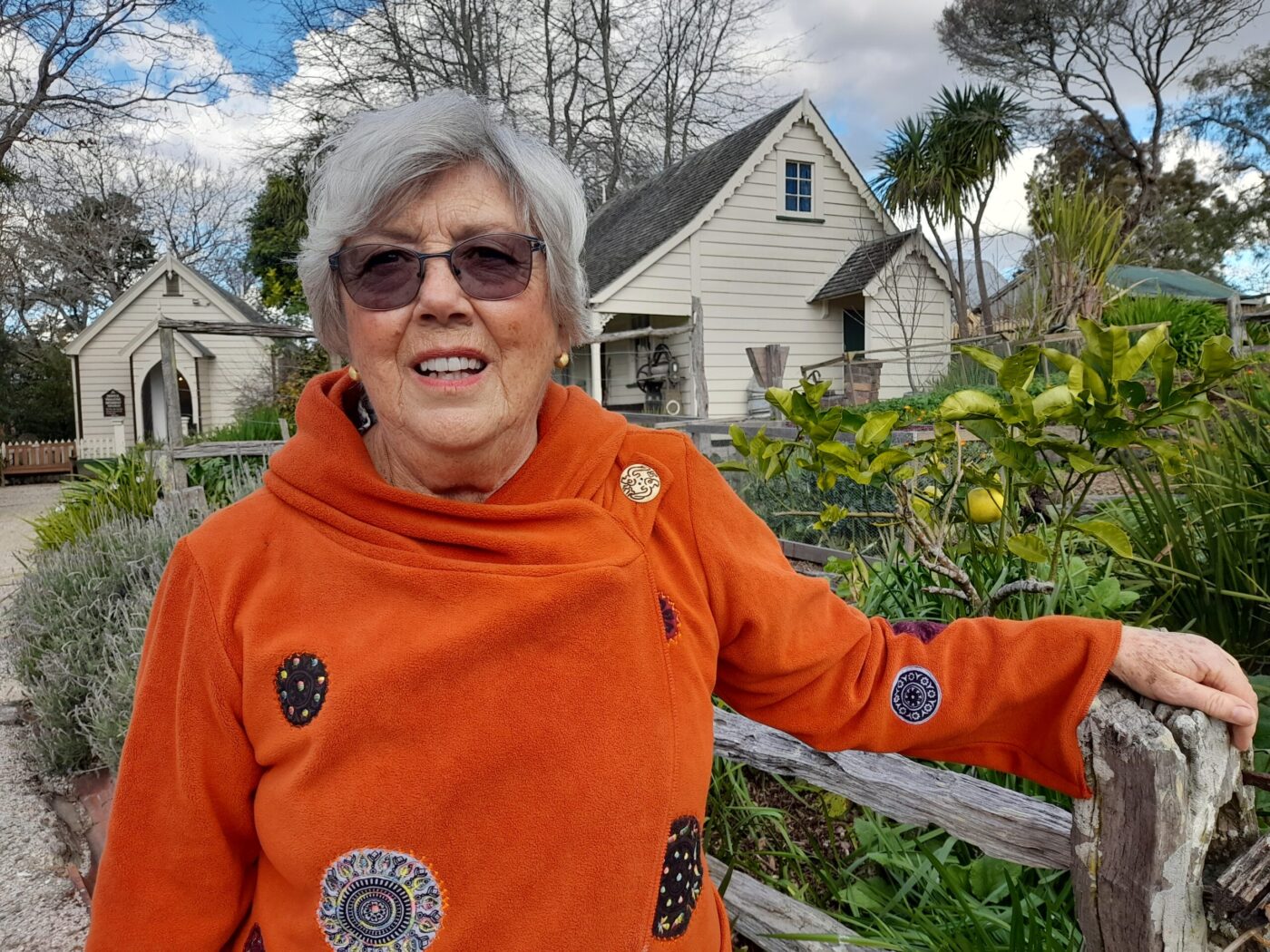
She’s a very positive advocate for Howick and volunteer in east Auckland, known for her can-do attitude and getting projects done, as she explains to PJ TAYLOR.
Where were you born and grew up?
I was born in the Rangitikei in Marton, then an important railway junction. My father was of German descent with his family purchasing land when the Government opened up the Pukepapa block in the 1860s. His family came via the Barossa Valley, South Australia. However, not directly from their small farm holding in Silesia, now Germany, so it was a shock for the several German speaking families who had come to Marton to have to learn English when World War I broke out. Being one of the baby boomers following WW2, the war and its effects loomed large over my childhood. I clearly remember packing up food parcels and being taken to war memorial ceremonies. Marton was a boom town in those days. It’s now a sleepy byway and the main trunk line a memory only.
Why did you decide to come to live in east Auckland and when?
It was 13 on a family holiday when we came to Auckland and drove out to explore Howick, Bucklands Beach and Cockle Bay that I fell in love and announced in the car returning to the campground I was going to live here one day. My father laughed and said: “Not likely!” I moved to Farm Cove in Pakuranga in the early 1970s and have been here ever since – but perhaps Dad was right – I haven’t quite made Howick yet.
What did you do for work?
Paid employment you mean? The word ‘retirement’ needs redefining. I was lucky enough to be one of the first to obtain a diploma in volunteer management at a time when the value of volunteering was just becoming recognised. I worked for 20 years for the Auckland Cancer Society managing their 300-plus volunteers over a variety of programmes. That experience has translated over the years into volunteer involvement with the Howick Historical Society.
You’ve been very actively involved in the Howick and Districts Historical Society for a long time, including tenures as president. What did you do for it?
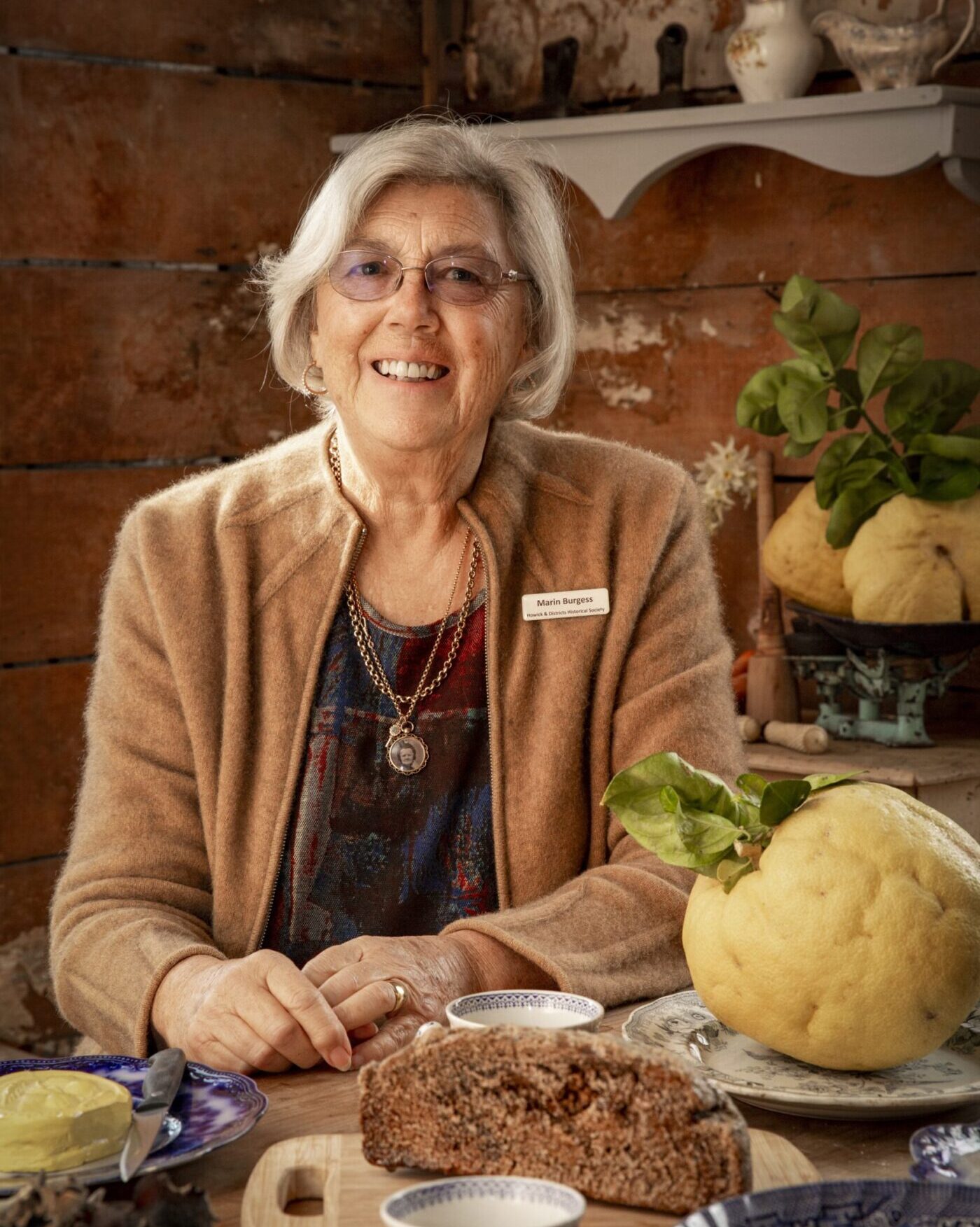
It’s probably easier to ask what I haven’t done. I’ve loved it all. When the Howick Historical Village opened initially, I helped with guiding for the school programmes in the early 1980s – a programme still underpinning the link with schools who visit from throughout Auckland. It’s often been said if we had a dollar for every adult who visits the village and tells us they came with their school we’d not need to fundraise. I also ran the Junior Historical Society, started the regular Live Days, and curated some of the first displays. I was eventually elected to the committee (now board), became the first woman president in 1997, and repeated that folly again in 2020 when the society supported the formation of the 175 Trust to oversee the 175th anniversary of the settlement of Howick at Owairoa.
What does the Howick Historical Village mean to you?
The Howick Historical Society and Village seem to run my life, and I wouldn’t have it any other way. Being involved in any group or organisation keeps one – um – ‘young’. I’m at home in the cottages and surroundings. I enjoy the intimacy of the stories portrayed within the context of the historical village and am in awe for the determination those early families to this area showed as they settled into a completely different world – Christmas wasn’t meant to be in summer! In July 1848, many of the recently arrived families were living in tough conditions in raupo cottages exactly as we have in the village – and it snowed. How can one not be impressed by the fortitude of those people?
Who are some of the people in the east Auckland community that you admire and why?
First and foremost, it is local historian, Alan La Roche. Along with other early society members, Alan led the development of the Howick Historical Village from concept to completion. The multitude of negotiations, plans, design and layout all carry Alan’s stamp. The hours of research, the contributions of books, artworks, are way above the norm. To my way of thinking, Alan is to Howick what Thomas Hocken is to Dunedin, or Alexander Turnbull is to Wellington. Howick is fortunate to be able to claim Alan as our historian. It was very apparent during the 175th celebrations, Howick has many strong and loyal residents who value heritage, history and their local communities. East Auckland hosts many cultures who were keen to involve themselves with the local events which they did enthusiastically. Their involvement makes our communities vibrant and current. I must salute two organisations – Howick Rotary Clubs and the Freemasons Charitable Trust, who both acknowledge the value of heritage and community involvement by financial and hands on support.
What are some of your favourite things to do and places to visit in east Auckland?
The number one place to visit is of course the Howick Historical Village – seven acres of delight all set within Lloyd Elsmore Park. The village offers a trip back in time, an intriguing peep into past lives and is an oasis of serenity with the lovely gardens tended by a heritage gardener Luke Southern, who not only cares for the dozens of heritage plants, shrubs and trees, but researches their expansion throughout Aotearoa New Zealand. The park itself has to be seen to be believed offering in excess of 20 sports, space and activities for all including many happy dogs – there’s also the great Homestead Cafe attached to the historical village.
As one drives into Howick the famous view shaft offers a marvellous view no matter the weather or time of day. View shafts are intrinsic to Auckland. They’re an essential setting for wherever they are and need to be retained and protected. Stockade Hill adds to the drama and provides a top-of-the-world all-embracing 360-degree view of Auckland east to west. Try it early in the morning for a sunrise treat.
Then wander down to Picton Street, Howick’s main road for quirky inviting shopping and plenty of good cafes. The challenge then becomes just which cafe to try – they’re all good. Picton Street is bookended by Stockade Hill and the iconic All Saints Church, erected by Bishop Selwyn for the Fencible families who settled here.
The word Fencible is seen often in Howick in a tribute to those people who took the initiative to sail to New Zealand for a better life in the 1840s. As well as the murals dotted around, there’s a small garden reserve in Picton Street with seating. It also has the Howick 175 commemorative plaque and a series of locally made plaques detailing glimpses of our local scenes. Many roads in the Howick ward recognise the early families – Hattaway, Morrow, Buckland, Maclean, Litten, Mattson, Reeves, Udy – the list is long.
Mangemangeroa Reserve, one of the best volunteering efforts over many years, has provided us with a great walk with the best views. The Friends’ team of volunteers has worked on pest control, plant regeneration, track maintenance and signs and continue to do so. There’s parking and take water and good footwear and you’re in for a treat.
Another well-kept secret in Howick is the Polish Museum. East Auckland has two museums both representing specific eras and communities. The Polish Museum tells of the arrival of the Polish refugee children who were brought to New Zealand in the 1940s, but it expands on that theme and explores Polish traditions, culture and music and can absorb a surprisingly good hour. It’s in Elliot Street.
The Fo Guang Shan Buddhist Temple is also on my list of favourite places. Warm, welcoming and offering a serenity for visitors, it’s particularly breathtaking in November with the wonderful blossoms – but don’t wait until then, art and photography often feature in the galleries, and they have a pretty good cafe on site as well.
And the beaches – of course the beaches, that’s where it all started for me on that day years ago. They’re safe, clean and easy to access. The Warren Boardwalk from Half Moon Bay across to Little Bucks Beach is a pleasure and underlines the contribution of two people, Ross and Shirley Warren, who gave much to east Auckland.
If there was one thing in New Zealand society you’d like to see change, what would that be?
Not too much. We’re fortunate in New Zealand, however, as the current insistence on economics as being the sole contributor to ‘wealth’ makes me shiver. Wealth has a much wider definition than just money. Wealth includes health, safety, security, meaningful work, peace of mind, neighbours, community. Access to schools, libraries, museums, galleries large and small, parks, our moderate climate, the environment with its green space, the numerous sports we can play and watch. And the growing awareness of tikanga serves us well. Shopping malls do not represent ‘wealth’, neither does paving paradise. We should all love where we live.

